- Oct 30, 2024
"The Art Seduction" by Robert Greene | Book Summary
- Antidote
- 0 comments
It's one of the most ruthless, Machiavellian books I’ve read.
Greene reveals the psychology of attraction, showing how seducers control outcomes by mastering human flaws and desires.
It may shock readers with its amoral tone—Greene portrays the seducer as a predator, with their target as a willing victim. Let's replace victim by target here.
Key Frameworks of Seduction from The Art of Seduction by Robert Greene
The early part of The Art of Seduction sets up the foundation for preparing the reader to explore the strategies of seduction. This is a seductive framework used by seductor to master the art of seduction.
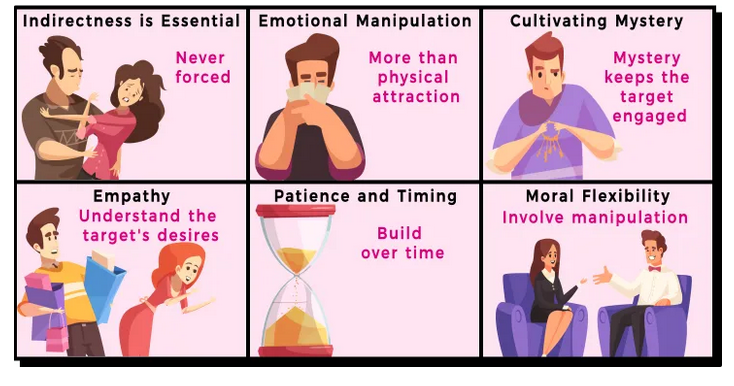
1. Indirectness is Essential
Seduction should never be direct or forceful. A seducer uses subtle, indirect means to draw their target in, allowing them to feel like they are choosing willingly rather than being coerced. The art lies in making the target pursue you.
2. Mastering Emotional Manipulation
Seduction is about more than physical attraction—it thrives on playing with emotions. Seducers evoke desire, confusion, and vulnerability, eventually leading to what Greene calls a "psychological surrender." Emotional depth, not just lust, is key to creating lasting influence. Lust fades, but love and obsession endure.
3. Cultivating Mystery and Desire
A sense of mystery keeps the target engaged. By not immediately fulfilling desires, the seducer creates longing and curiosity. Greene emphasizes that satisfaction should be withheld to maintain interest and excitement.
4. Empathy and Understanding
Successful seduction requires a deep understanding of the target's desires and fears. Seducers focus on the other person, not themselves, and tailor their approach by studying the target's personality, social dynamics, and aspirations. Greene advises being "other-centered" to know what captivates them.
5. Patience and Timing
Seduction is a gradual process that builds over time. Rushing creates fleeting desire; taking time fosters deep emotional connections. A seducer must allow attraction to develop organically, aiming for something more enduring than just temporary lust.
6. Moral Flexibility
Seduction often involves manipulation, and Greene acknowledges the morally ambiguous nature of the practice. He advises that seducers must be willing to overlook the ethical implications in the pursuit of their desires.
Part 1: Seducer Archetypes & victims
In The Art of Seduction, Robert Greene introduces various seducer and target archetypes, each appealing to different fantasies and desires.
He emphasizes that there isn’t a one-size-fits-all approach—each archetype has its own seductive style.
Greene encourages you to discover and embrace your natural archetype, using it to enhance your seductive power.
Let's explore key seducer archetypes you might identify with:
Seducer Archetypes
Profile 1: The Siren
The Siren embodies exaggerated femininity and captivates others with her charm. It’s not just her physical beauty that mesmerizes; it’s her ability to evoke fantasies that enchants and draws people in. Sirens possess a powerful sexual energy, skillfully wielding it to create an irresistible aura of allure, offering an escape from the constraints of daily life.
For men, the Siren is the ultimate fantasy—a figure who promises pleasure, freedom, and indulgence, making them lose control, which they secretly yearn to do.
This archetype doesn’t rely on force; instead, she cultivates a heightened, theatrical presence. By understanding her target's desires, the Siren lures them in with magnetic appeal, carefully maintaining an image that fulfills their fantasies.
In a world where many shy away from such boldness, the Siren stands out, mastering the art of attraction by embodying what the other person craves.
Profile 2: The Rake
The Rake embodies an infectious passion for the opposite sex, creating a magnetic pull through his intense fascination with women. His unrelenting desire makes those he pursues feel deeply desired, representing a powerful fantasy for many, much like how The Siren captivates men.
Unlike most men who are often cautious, The Rake is boldly unrestrained, driven by his love for women. This overwhelming devotion is both exhilarating and dangerous, as he may be disloyal or amoral, but it only adds to his allure.
What sets The Rake apart is his ability to make women feel like the center of his world.
His reputation for seducing many adds an air of mystery, drawing women in and prompting them to wonder what makes him so irresistible. He is a master of seductive language, using words to stir deep, repressed longings and fantasies.
By blending danger with pleasure, The Rake taps into a woman’s desire for excitement and attention.
Profile 3: The Ideal Lover
The Ideal Lover treats love as an art, turning romantic experiences into deeply poetic and emotional adventures. They elevate love beyond the mundane by creating grand gestures—like writing songs or poems—making their partner feel as though they are part of a beautiful story.
What sets The Ideal Lover apart is their ability to become the perfect partner by understanding and fulfilling their target’s deepest needs. This archetype requires empathy, patience, and an acute attention to what others are missing in their lives. While many focus on their own desires, The Ideal Lover excels at providing what their partner longs for, making them truly irresistible.
Most people carry broken dreams from their youth, fantasies of love, adventure, or spiritual connection that reality often fails to meet. The Ideal Lover revives these lost dreams, reflecting the fantasy that their partner yearns for. They are masters of illusion, offering an antidote to the disappointment and disillusionment of everyday life.
Profile 4: The Dandy
The Dandy seduces by blending masculine and feminine traits to create a captivating androgynous appearance.
This ambiguity fascinates others and makes them irresistible. The Dandy challenges societal norms, appearing mysterious, elusive, and captivating.
They represent a sense of freedom—a quality many secretly crave—because most people feel trapped by the rigid social roles they are expected to play.
By harnessing the power of ambiguity and rejecting traditional roles, the Dandy creates personas that cannot be easily categorized, enhancing their allure.
Profile 5: The Natural
The Natural seduces by embodying childlike qualities—spontaneity, sincerity, and playfulness—which make them irresistibly charming. Their carefree, vulnerable demeanor disarms others, creating an atmosphere of ease and joy.
Naturals tap into our subconscious desire to relive the simplicity and spontaneity of childhood. In their presence, we are transported back to that golden age. They make a virtue of their weaknesses, eliciting sympathy and a protective instinct from others—much like how we respond to children.
While many of these traits are authentic, some Naturals deliberately exaggerate their vulnerability as a conscious seductive tactic.
Profile 6: The Coquette
The Coquette seduces by mastering the art of playing hard to get—alternating between giving hope and frustrating their target. This hot-and-cold dynamic creates obsession, as the Coquette keeps their target hooked with the promise of fulfillment that never quite arrives.
A historical example is Joséphine Bonaparte, who captivated Napoleon through this unpredictable interplay, leaving him in a state of constant pursuit.
Delay is the Coquette's primary weapon; by keeping their target waiting and uncertain, they build a deeper emotional connection. The target becomes more fixated, driven by the desire for something just out of reach—whether it's love, pleasure, or power. Coquettes exude self-sufficiency, making them appear unattainable, which only enhances their allure.
This teasing, aloof behavior taps into our human desire for what we can’t have, making the Coquette a master of psychological seduction.
Profile 7: The Charmer
The Charmer seeks to please everyone, shining in social settings by making others feel appreciated and valued. Their seduction lies in providing comfort and adapting to others’ emotions, creating a sense of validation and ease.
Charmers are masters of manipulation through kindness. They deflect attention from themselves, focusing entirely on their target, making them feel understood and admired. Unlike other archetypes, they avoid conflict and instead use empathy and flattery to build rapport. By boosting their target's vanity and self-esteem, they quietly gain influence and control.
Charmers don’t argue, complain, or draw attention to their own needs, making them irresistible to those who crave acceptance. Their charm, devoid of overt sexuality, is powerful because it leaves people feeling uplifted and dependent on the charmer’s soothing presence.
Profile 8: The Charismatic
The Charismatic radiates confidence and embodies a larger-than-life vision or cause, drawing people in with their unwavering conviction.
Charisma comes from a unique blend of self-confidence, purpose, and energy, creating a presence that makes others feel drawn to them, sensing something extraordinary.
Charismatics use subtle techniques such as:
piercing gazes,
calm speech,
and an aura of mystery, to seduce on a grand scale.
They can be both intimate and distant, creating an enigmatic allure that pulls people in.
Key to their charm is the ability to reflect others’ energy and desires, making people feel deeply connected. Charismatic leaders also balance their confidence with a hint of vulnerability, preventing them from appearing arrogant while humanizing their larger-than-life persona. In a world filled with uncertainty, their decisiveness and clarity inspire trust and loyalty.
Profile 9: The Star
The Star captivates through mystery and distance, drawing people in with an untouchable, ethereal aura. They stand out with a unique style that commands attention, but their power lies in their elusiveness, allowing others to project fantasies onto them.
Stars thrive on the desire for escape from everyday life, feeding people’s need for something otherworldly. Their dreamlike quality influences us unconsciously, making them objects of fascination and imitation. However, their challenge is to maintain this allure, as too much exposure risks breaking the spell.
To seduce like a Star, cultivate an intriguing presence—visible enough to inspire, yet distant enough to remain mysterious.
Profile 10: The Anti-Seducer
The Anti-Seducer is the opposite of a successful seducer—someone whose behaviors actively repel rather than attract. Robert Greene identifies key characteristics that destroy seduction, helping readers avoid common mistakes that can kill any seductive potential. These anti-seductive traits can creep in unnoticed, undermining your appeal even if you possess otherwise charming qualities.
Here are the main types of Anti-Seducers to avoid becoming:
1. The Brute
The Brute is impatient, pushy, and often aggressive. They assume you're interested and rush the process, offending your ego by not allowing space for mystery or subtlety. They lack the grace to wait and see, leading to frustration. A good way to recognize a Brute? Keep them waiting and observe their reaction. Patience is crucial to seduction—forcing your target will only push them away.
2. The Vain
Vanity is another trait that kills seduction. The Vain person constantly talks about themselves, always seeking admiration rather than offering it. True seducers are focused on the desires of others, but vanity shifts the attention inwards, making the target feel unimportant. Humility and genuine interest in others are essential qualities to cultivate.
3. The Miser
A Miser isn't just stingy with money but also with emotions, energy, and attention. This type fears risk and holds back generosity, leaving others feeling neglected or undervalued. In seduction, being open and generous, both emotionally and materially, is critical. The Miser's closed-off nature creates a feeling of scarcity and emotional dryness, repelling those they wish to attract.
According to Robert Greene, this is the worst type of anti-seducer and should be avoided at all costs.
4. The Chatterbox
The Chatterbox talks incessantly, usually about themselves, revealing deep-seated selfishness. Their constant talking serves their own need for attention rather than deepening a connection. A skilled seducer listens and observes more than they speak. Mastering the art of silence and restraint helps build mystery and allure.
5. The Sensitive One
Hypersensitivity is another anti-seductive trait. The Sensitive One cannot handle criticism or teasing, reacting with offense to even light-hearted jests. True seducers are unflappable and maintain a sense of humor, even when they're the target of jokes. Overreacting to small slights shows insecurity and weakens your seductive power.
6. The Boor
A Boor is someone who lacks refinement, whether in their physical appearance or manners. They often dress sloppily, speak loudly, or fail to show attention to detail in their interactions. In seduction, even small details matter—lack of care in how you present yourself erodes attraction over time. The Boor’s crudeness or loudness makes them stand out for the wrong reasons, often alienating potential partners.
7. The Suffocator
This type becomes clingy and needy, overwhelming their target with constant attention or demands. The Suffocator stifles freedom and creates a sense of emotional suffocation, which leads to the target withdrawing to regain space and autonomy. Balance and space are vital in seduction—people need room to desire you.
8. The Moralizer
Judgmental and preachy, the Moralizer makes others feel restricted and trapped by imposing their beliefs or values. Seduction thrives on freedom and acceptance, but the Moralizer kills attraction by trying to "fix" or judge the behavior of their target. A true seducer embraces differences and avoids coming across as superior.
9. The Windbag
The Windbag talks excessively, especially about themselves, showing little interest in the other person. This kills mystery and bores the target. A seductive conversation is about balance—sharing just enough about yourself while keeping the other person intrigued, but not revealing everything.
10. The Vulgarian
Lacking refinement or subtlety, the Vulgarian comes off as crude, tacky, or lacking in class. This puts off their target, who craves grace and sophistication. Seduction often involves elevating the experience, and the Vulgarian destroys this sense of specialness by failing to meet basic social or aesthetic standards.
Target Archetypes
Now that we've explored the mind of the seducer, it’s time to take a closer look at the other side of the equation: the target.
In seduction, understanding your target is everything. Before you can successfully captivate someone, you need to know what drives them, what they crave, and most importantly, what they lack.
Robert Greene breaks this down into two key areas: personality types and victim archetypes.
1. Knowing Your Target
Successful seduction hinges on recognizing the desires and fantasies of the person you’re pursuing. Greene identifies different personality types, each with specific emotional needs. By tailoring your approach to fit these needs, you can create a magnetic pull toward you.
Let's look at the key personality types Greene outlines:
Key Personality Types:
Nostalgics – Nostalgics are driven by a deep longing for the past—their "glory days." They find comfort in familiarity and are drawn to anything that reminds them of what they've lost or miss. To seduce a Nostalgic, offer them a taste of that lost world. Become the person who can restore what they feel has slipped away.
Escapists – Escapists feel trapped—by society, by their own choices, or by life’s limitations. They yearn for freedom and adventure, something to take them away from their daily grind. If you can present yourself as the doorway to excitement and liberation, they’ll be irresistibly drawn to you.
Self-Indulgents – Self-Indulgents are unapologetically themselves. They revel in their quirks, flaws, and eccentricities and want others to do the same. They crave validation, and a seducer who indulges their self-love, who makes them feel seen and adored for who they truly are, will hold significant power over them.
Seekers – Seekers are on a quest for a specific fantasy or ideal. They’ve built up in their mind what love, adventure, or life should look like, and they are searching for someone who can make this fantasy a reality. If you can embody or reflect their deepest desires, you will become their perfect match.
Understanding these core personality types enables you to tailor your seduction strategy to resonate with their deepest emotional needs. By fulfilling these desires, whether it's nostalgia, freedom, validation, or a long-held fantasy, you become not just a temporary interest, but someone who provides what they've been subconsciously seeking. This is the key to a more powerful and lasting seduction.
2. Victim Archetypes
Beyond personality types, Greene introduces the idea of victim archetypes—people who are particularly vulnerable to seduction due to certain traits or life situations. These archetypes give you a blueprint for how to approach your target by exploiting their unique vulnerabilities.
Each victim archetype has a distinct weakness, a point of entry that, when identified, can be used to draw them closer.
Greene’s theory is that seduction succeeds when the seducer understands and exploits the specific vulnerability of the right "target."
The Reformed Rake/Faded Siren: Once skilled seducers themselves, they now long for the excitement of their past conquests. Reignite their former passions by making them feel as if they’re still as captivating as ever.
The Disillusioned Idealist: Disappointed by the harsh realities of life, these people once believed in adventure and romance. They now seek an escape. Offer them a taste of the fantasy they once dreamed of.
The Spoiled Child: Raised with every desire catered to, they demand constant excitement and novelty. Keep them entertained and distracted to seduce them.
The Prude: Obsessed with appearances and social norms, the Prude fears scandal. To seduce them, offer the thrill of transgression and the allure of forbidden pleasure.
The Fallen Star: Once adored by many, their fame has faded. Seduce them by restoring their self-worth, making them feel like they’re still in the spotlight.
The Novice: Innocent and inexperienced, they are drawn to those who can introduce them to new experiences. Become their guide into the unknown.
The Competitor: Always seeking a challenge, they thrive on the thrill of the chase. To seduce them, resist and create a sense of competition.
The Exotic Fanatic: Fascinated by the foreign and unfamiliar, they are drawn to uniqueness. Present yourself as mysterious and different to pique their curiosity.
The Drama Queen: They crave emotional intensity and conflict. Offer them excitement through tension and drama, keeping their emotions in a constant state of turmoil.
The Know-It-All Professor: Intellectually driven, they analyze everything, including love. Challenge their intellect while subtly appealing to their emotional weaknesses.
The Venus: Their beauty once gave them power, but they fear losing it as they age. To seduce them, appreciate their mind and talents, but don’t neglect their appearance.
The Big Baby: Refusing to grow up, they avoid responsibility and seek constant fun. To seduce them, play the caring, responsible adult without judging or criticizing.
The Rescuer: Attracted to those who appear vulnerable, they take pride in "saving" others. To seduce them, appear in need of help, and they’ll play the hero.
The Rake:Cynical and pleasure-driven, they’ve seen it all. To seduce them, be young, naive, and resist their advances to keep them intrigued. They enjoy the challenge.
The Idolater: Always searching for something or someone to worship, they are perpetually dissatisfied. To seduce them, become the object of their obsession, embodying qualities they admire.
The Sensualist: Hyper-aware of sensory experiences, they are drawn to beauty, fashion, and style. To seduce them, appeal to their senses with aesthetics and luxurious experiences.
The Monarch: Powerful and surrounded by flatterers, they crave authenticity. Treat them like an equal, offering brutal honesty, while subtly flattering their ego.
The Androgynous: These individuals feel burdened by societal expectations regarding gender. To seduce them, embody a balance of masculine and feminine traits, offering them freedom to express their true selves.
For each type, understanding their core desires is key to seduction, as it allows you to meet their deepest needs and win them over.
3. Seductive Contexts and Environments
Finally, Greene highlights the importance of the setting in which seduction takes place. Certain environments amplify the effects of seduction, making people more vulnerable and easier to influence.
Effective Seductive Environments:
Social Events – Parties and gatherings provide opportunities for playful teasing and attention, setting the stage for seduction.
Secluded Spaces – Private, intimate settings can intensify emotions and make someone more susceptible to seduction.
-
High-Stress Situations – In moments of tension or crisis, people are more likely to seek comfort, making them easier to seduce.
Part 2: The Seduction Process
In Part 2, we’ll dive into the psychological techniques that can lead to successful seduction, regardless of your appearance.
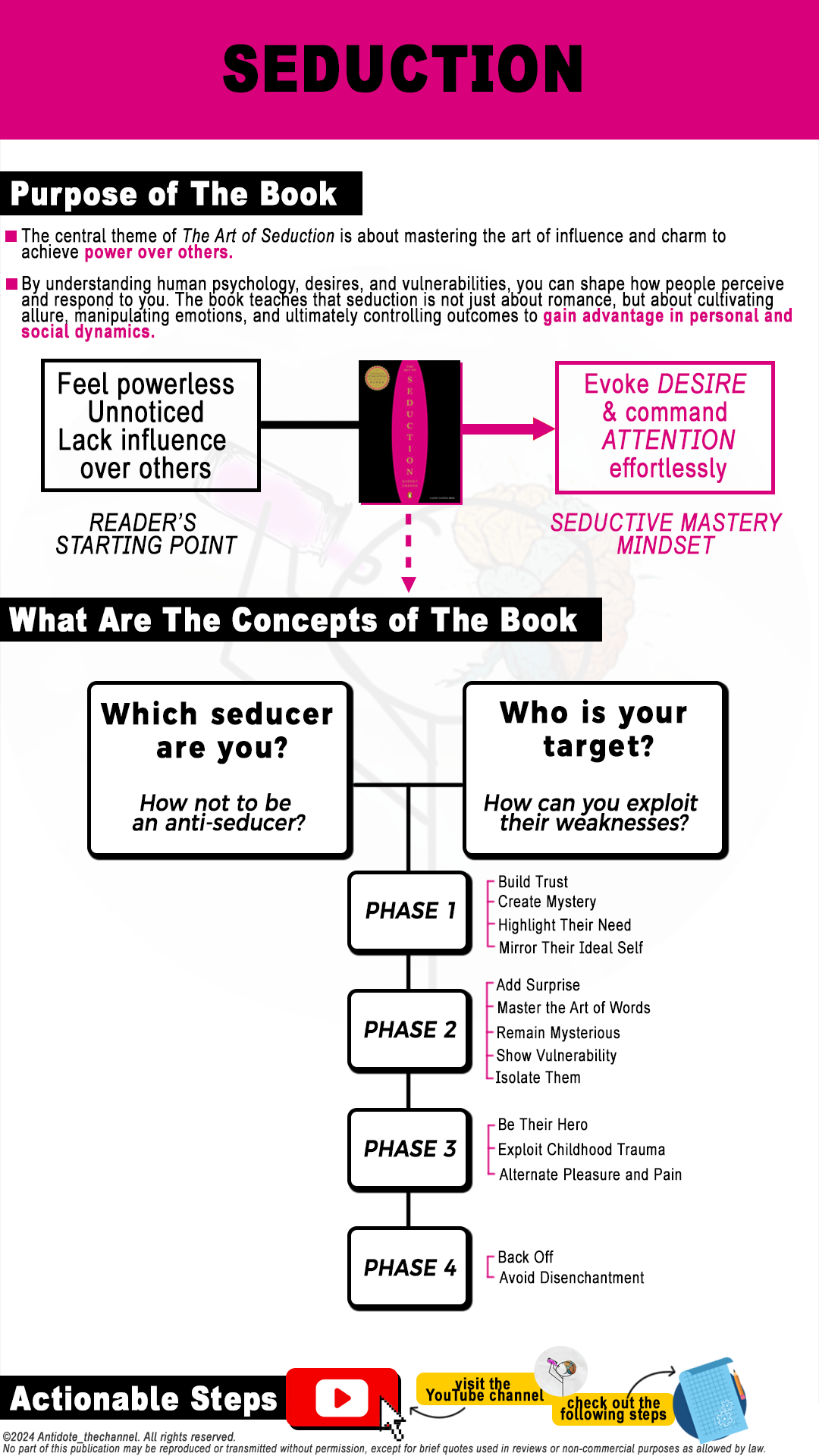
Robert Greene outlines the seduction process in four distinct phases, each broken into actionable steps. These phases take you from sparking initial desire to achieving the final, decisive conquest.
Greene’s 24 laws of seduction are not mere tricks or routines; they are strategic principles. Each law provides a tailored approach for different types of seduction, and it’s essential to know which ones work best together. Not every technique will suit every situation, and sometimes, despite following the "recipe," the person you're trying to seduce simply won’t respond.
You don’t need to apply every law at once. Some laws are meant to guide your overall awareness, helping you understand what works and when.

Phase 1: The Awakening of Desire Isolate and Intrigue –
Your goal in this phase is to pull your target out of their daily routine and occupy their mind with thoughts of you.
Choose the Right Victim
Seduction begins by selecting the ideal target. Like in marketing, not everyone will be a good fit. Avoid those who are too career-driven or emotionally unavailable, as they’re likely to resist your efforts. The best targets are those seeking change or excitement.
To succeed, you must know your target. Observe their habits and interests to ensure they’re worth pursuing. This "screening" phase will help you determine if seduction is possible and if they’re open to your advances.
Create a False Sense of Security – Approach Indirectly
Your target should never feel manipulated; instead, they should feel in control, much like in sales, where the customer believes they are making their own decisions.
To successfully seduce, lower your target's defenses by being subtle and indirect. While a dramatic approach might work for those seeking excitement, subtlety is usually more effective.
Send Mixed Signals
Keep your target intrigued by sending mixed signals.
Alternate between warmth and coldness to create ambiguity, keeping them guessing and heightening their curiosity.
Appear to Be an Object of Desire – Create Triangles
Once your target is intrigued, you need to transform their interest into deeper desire.
Desire often stems from a sense of something missing—an emptiness your target seeks to fill, and you can stir this feeling by making them aware of the excitement and romance lacking in their life.
Creating a triangle is a key tactic in seduction. The idea is to involve a third party to create tension, competition, or jealousy.
By positioning yourself as someone desired by others, you make yourself more desirable. This dynamic increases your allure because humans are naturally drawn to what is coveted by others.
The goal is to make your target feel like they are competing for your attention, which can intensify their desire.
Create a Need
The key to seduction is building tension and leaving your target wanting more. A seducer’s strength lies in frustrating desire just enough to keep the other person hooked. Make them feel incomplete, highlight what they lack, and position yourself as the solution.
Master the Art of Insinuation
To charm and captivate, mirror your target’s values, wants, and moods. Subtlety is key—use suggestion rather than direct statements. Seduction thrives on planting ideas that grow over time without the target realizing it.
Enter Their Spirit
To solidify your presence in their mind, mirror their desires and emotions, adapting your behavior to make them feel understood on a deeper level. People are naturally self-focused, so by reflecting their inner needs, you bypass their defenses and become integral to their thoughts.
Create Temptation
Once your target’s thoughts increasingly revolve around you, the next step is to present them with something irresistible—an adventure or pleasure that they can’t refuse.
This is where seduction deepens into something more powerful.
Present what they desire most, but do so subtly—without making direct or obvious offers.
People are irresistibly drawn to what seems just out of reach, especially when they feel they shouldn’t have it.
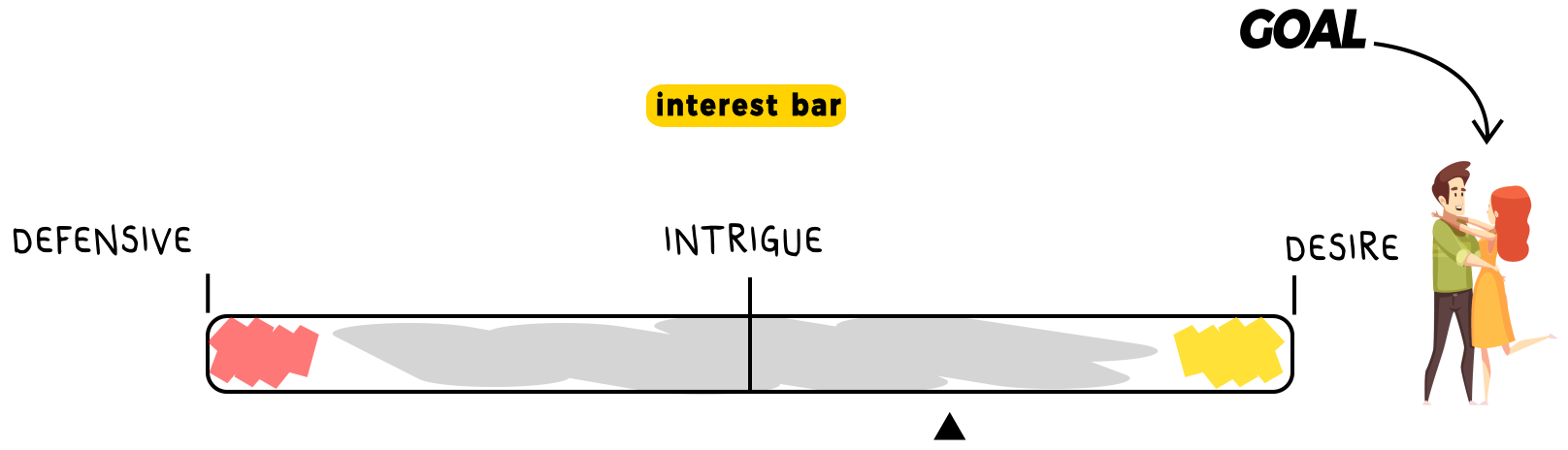
Phase 2: Lead Them Astray – From Doubt to Pleasure
At this point, your target's interest in you is growing, but their attachment is still fragile—they could turn back at any moment. The goal in this phase is to lead them so far astray emotionally that retreat becomes impossible.
Keep Them in Suspense - What Comes Next?
Keep your target on edge by maintaining suspense. The artful use of soft, pleasant words can intoxicate them and ignite their fantasies.
Surprise and excitement are key—introduce unexpected twists and delays to build anticipation and tension.
Keeping them guessing makes them desire you even more.
Use the Demonic Power of Words to Sow Confusion
Words have the power to confuse and enchant. Use them strategically to captivate your target’s attention—speak to their desires, stroke their ego, and flatter them subtly. Avoid confrontation or debates, as they break the spell of seduction.
Pay Attention to Detail
The most powerful tools of seduction aren’t your words, but the unspoken gestures, thoughtful gifts, and subtle acts of attention. These small, carefully chosen details leave a lasting impression that words alone cannot achieve. Mastering these cues enhances your allure and deepens their desire.
Poeticize Your Presence
Infuse your persona with poetic and exotic elements that evoke daydreams and fantasies. This ethereal aura sets you apart and makes you irresistible; after all, mediocrity fails to captivate—it's the allure of the extraordinary that draws people in.
Create a captivating atmosphere of mystery and desirability through your charm and artistic expression. Recognizing the shifts in control during seduction is crucial, as it highlights the delicate balance of power.
Disarm Through Strategic Weakness and Vulnerability
To excite your target and elicit strong emotions, disarm them with strategic displays of weakness and vulnerability. By doing so, you give them the illusion of living out the fantasies you've stirred in their imagination.
Adopt a humble demeanor to appear less threatening, allowing your target to feel superior. When they perceive themselves as having control over you, their guard drops. Use your vulnerabilities to your advantage, projecting sincerity and harmlessness.
Confuse Desire and Reality – The Perfect Illusion
Cultivate an atmosphere where fantasy and reality blur, keeping your target captivated. People yearn for something beyond their mundane lives. By crafting an enchanting environment, you allow your target to project their desires and dreams onto you, making the illusion even more irresistible.
Isolate the Victim
To ensure there’s no turning back, isolate your target from their familiar environment.
By removing their emotional support structures, you increase their vulnerability to your influence.
However, proceed with caution; if you act too swiftly, it may trigger panic and cause them to retreat.
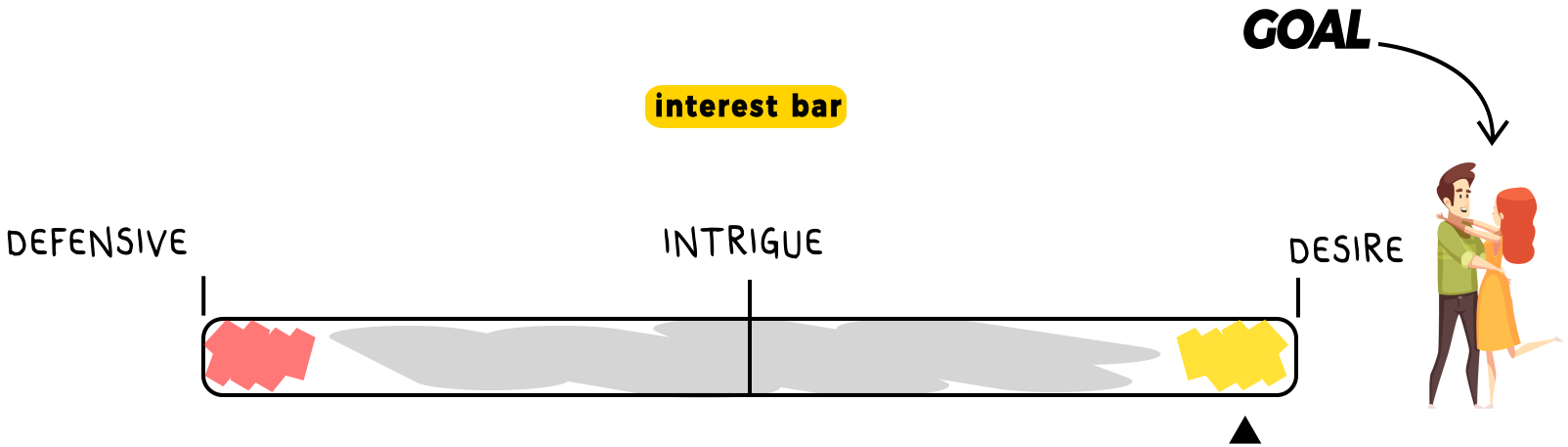
Phase 3: The Trap is Set – Leading to the Precipice
In this phase, your goal is to deepen the emotional impact you have on your target. By intensifying their feelings of love and attachment, you can manipulate their emotions, alternating between hope and despair until they become increasingly vulnerable.
Prove Yourself
To create a powerful jolt of emotion, demonstrate your sincerity through actions that resonate deeply with your target's repressed desires and childhood wounds. By bringing these feelings to the surface, you can fulfill their unmet needs, allowing you to penetrate deep into their psyche and stir uncontrollable emotions.
Effect a Regression
At their core, everyone yearns for the carefree days of childhood, where feelings of safety and protection prevailed. By encouraging your target to share stories of their youth, you facilitate an emotional regression, making them more reliant on you for comfort and support.
Stir Up the Transgressive and Taboo
There’s nothing more enticing than the taboo. By offering something forbidden, you stir primal curiosity and desire, which are hard to resist.
Incorporate elements that challenge societal norms to heighten excitement and intrigue, making your seduction feel like a daring adventure into the unknown.
Invoke the Sublime
By evoking feelings of hurt, fear, and anxiety, you prepare them for a profound emotional experience that brings them closer to you.
By positioning yourself as someone who offers more than just surface-level pleasure, but a deeper, almost spiritual fulfillment, you make yourself irresistible. Your target will not just see you as a person of desire but as someone who represents something greater—a path to self-discovery or fulfillment.
By subtly stirring feelings of hurt, fear, and anxiety, you pave the way for a transformative emotional experience, drawing them even closer to you.
Mix Pleasure with Pain
In relationships, an excess of kindness can lead to predictability and boredom. By introducing elements of doubt, fear, or jealousy, you create emotional dynamics that maintain engagement. These fluctuations in emotional experience heighten anticipation and create tension. When relief or pleasure finally arrives, it becomes all the more satisfying due to the emotional rollercoaster that preceded it.
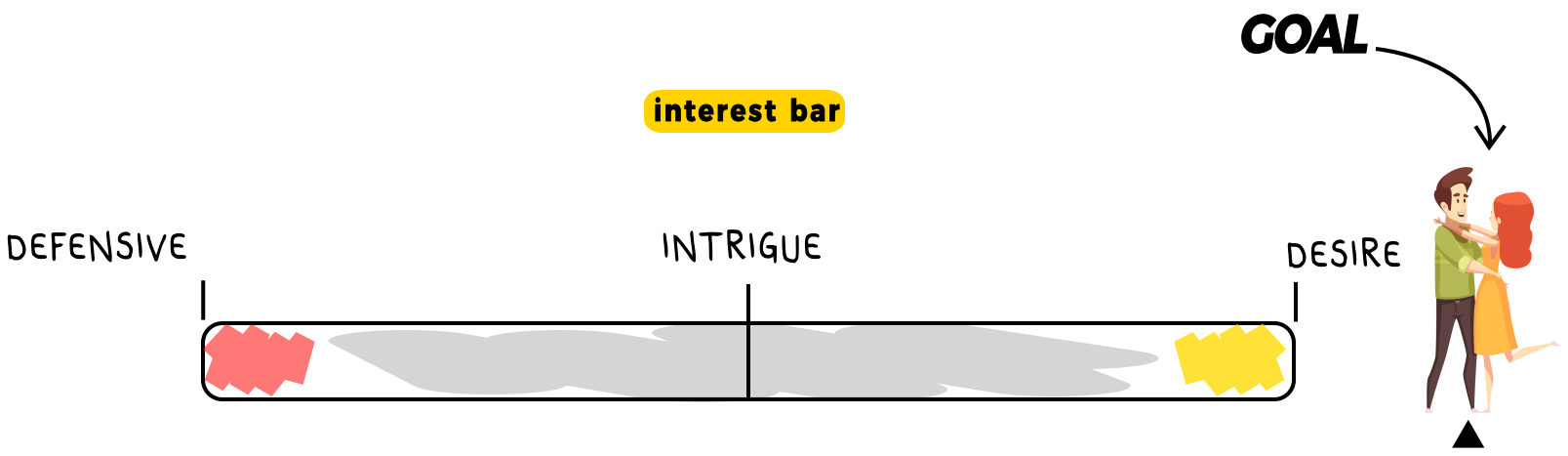
Phase 4: The Final Move – Know How to Seal the Deal
In this phase, you shift from mental and emotional seduction to physical seduction. Having already entangled your target’s mind and stirred their emotions, you now prepare for the final act. Your target is vulnerable and filled with desire, making this the perfect moment to initiate physical intimacy.
Give Them Space to Fall—The Pursuer Is Pursued
To intensify their desire, create some distance between you and your target. Allow them to feel the thrill of the chase. By giving them space, you stir their longing and amplify their desire, turning the dynamic upside down. As you strategically withdraw, send subtle signals that awaken their lust, spreading an irresistible allure like a potent poison.
Use Physical Lures
Seduction goes beyond mere words; it’s about visceral connection. Your target should feel your desire through your body language, tone, and overall presence. This primal form of communication is what ultimately seals the deal, evoking their most basic instincts and drawing them closer to you.
Master the Art of the Bold Move
Once the seduction is nearing its climax, the risk of disenchantment looms large, threatening to undo all your hard work.
When the moment arrives, act decisively. A successful seduction culminates in bold action—don’t allow your target to linger in uncertainty. Prolonging the process can lead to post-seduction disillusionment, which breeds resentment and diminishes the connection you've worked so hard to build.
Beware the Aftereffects
Once the seduction is complete, the aftermath is critical. If your goal is a lasting relationship, you must continue to re-seduce your target, keeping the cycle of tension and release alive. Seduction is not a one-time event, it requires constant effort to maintain desire.
However, if your intention is to move on, the exit must be swift and decisive. End things cleanly, both physically and emotionally, freeing yourself to pursue your next conquest without lingering attachments. The game then begins anew.
🎥 Prefer video? Watch The Art of Seduction explained on the channel:
Long version 1h30:
Short version 30 minutes:
Let me know what you think. Drop a comment below.